
What You'll Learn
- Which types of organic products can carry the USDA organic seal and which cannot
- Design and color rules for the USDA organic seal
- What requirements exist if you are using both the USDA organic seal and your certifier’s seal on the same product package or label
- When retail establishments can and cannot use the USDA organic seal on products prepared or processed in-house
- Guidelines for displaying the USDA organic seal in online retail and marketing
The USDA organic seal is a highly recognized and trusted mark that consumers use to identify organic products. It reflects that a product has undergone independent, third-party verification; a certifying agent has reviewed the operation’s Organic System Plan, conducted on-site inspection, and confirmed ongoing compliance with USDA organic regulations before the seal can be applied. This layer of documented, rigorous oversight is what distinguishes the seal from an unverified marketing claim. In order to maintain this level of consumer trust, the seal is strictly regulated. The seal can only appear on certain categories of certified organic products and can only appear in accordance with the visual guidelines set out by the USDA.1
Applying the seal incorrectly is a serious compliance violation. It can result in requirements to relabel product, suspension or loss of organic certification, and/or financial penalties of several thousand dollars for each violation.1,2 To avoid these costly corrections, make sure to submit all organic product labeling and packaging to your third-party certifier and wait for them to approve before printing and using them in the marketplace.
Correct Use of the USDA Seal
The USDA organic seal can only appear on certified organic products that fit the “100% Organic” or “Organic” product composition categories.4 Certified products that meet the requirements of the “Made with Organic” product category are not allowed to use the USDA organic seal on packaging, sales, or marketing material.4 Products that are not certified organic also cannot carry the USDA organic seal. This includes products with less than 70 percent organic ingredients.5 It also includes products from operations that are exempt from certification, such as an operation whose gross organic sales total $5,000 or less per year.6 These operations can legitimately sell or represent product as organic without being certified, but their products cannot display the seal.7 For a deeper look at these categories please reference article Product Composition – 100% Organic, Organic, and Made with Organic.
Correct Appearance of the USDA Organic Seal
If you use the USDA organic seal on your eligible product, you have to follow the appearance guidelines set by the USDA.8 You cannot change the seal’s fonts, size proportions, or color hues. Permitted versions include a color seal that is green, brown, and white or a black-and-white seal that can also have some transparent elements. No other color combinations are allowed. You can see and download approved seals on the USDA Organic Resource Webpage.
Two elements included in the downloadable USDA organic seals are optional. First, the trademark symbol may be used, but it is not required.1 Second, the downloadable seal files include horizontal lines or striping in the lower semicircle background to resemble rows of crops growing on a farm. This design element is also optional. The lower semicircle may instead be a solid color block, as long as it uses one of the approved USDA colors.
The Black-and-White Seal
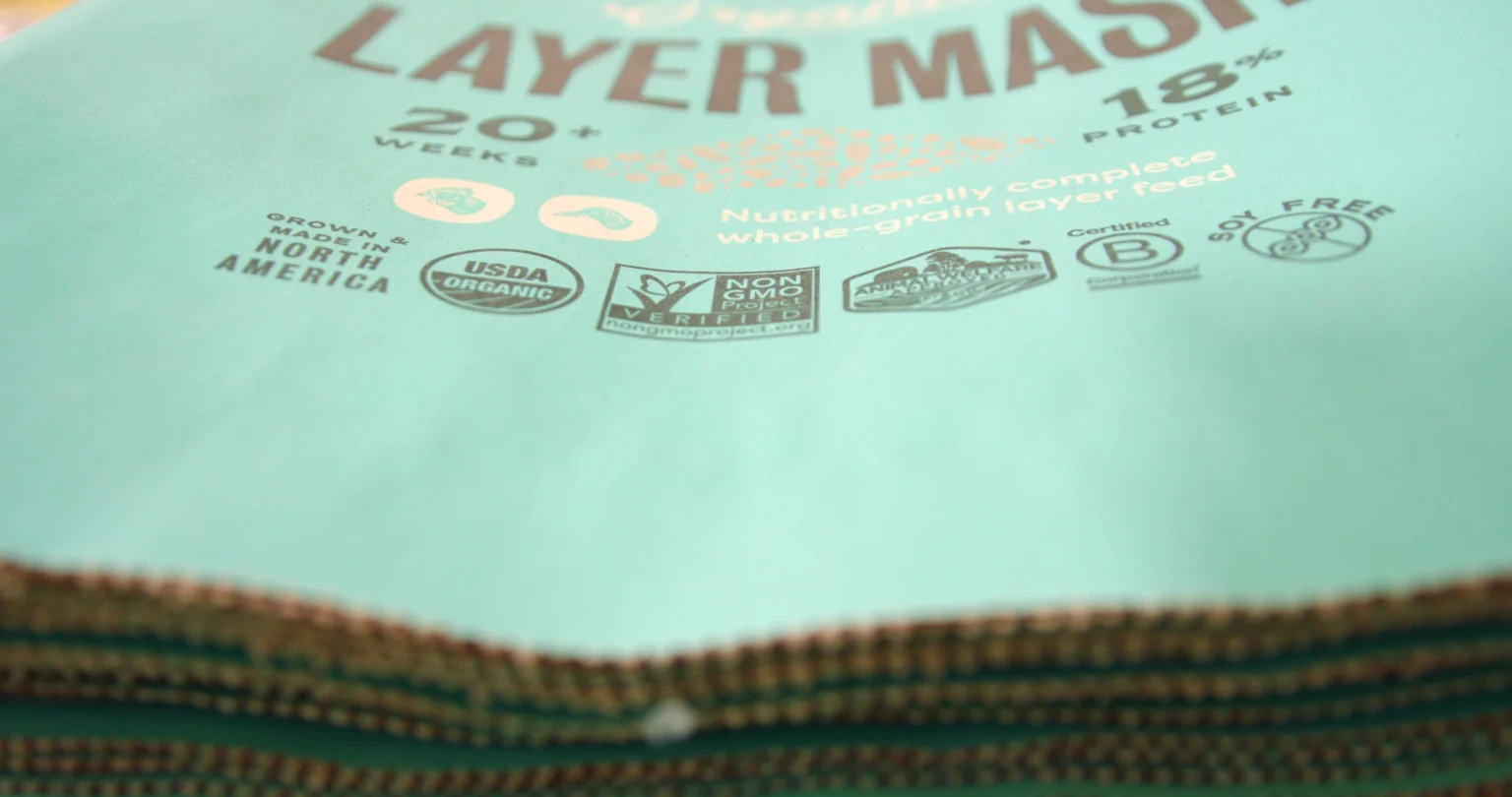
If you choose to use the black-and-white seal, the logo must consist of a black outer circle enclosing two semicircular halves: an upper white or transparent semicircle containing black “USDA” text, and a lower black semicircle containing contrasting white or transparent “ORGANIC” text.8
The Full-Color Seal
If you choose to use the color seal, the logo must appear on a white background and consist of a brown outer circle enclosing two semicircular halves: an upper white semicircle containing green “USDA” text, and a lower green semicircle containing white “ORGANIC” text.8 The green and brown used must match specific Pantone colors set by the USDA.1 Pantone colors are a standardized way to communicate exact color shades to professional printers so that colors print consistently. Make sure to communicate these exact colors in your printing files and approval process. Pantone colors for the color seal are PMS 348 for the green and PMS 175 for the brown.1 You cannot change the colors or hues of the seal to match your branding.
Using Both the USDA Seal and Your Certifier’s Seal
Products in the “100% organic” and “organic” product composition categories are also allowed to use the certifier’s seal on their packaging.9 Neither seal is required, but both are allowed.9 If you choose to use both the USDA organic seal and your certifier’s seal, the certifier’s seal must not be displayed more prominently than the USDA seal.9 More prominent could mean that the certifier’s seal is bigger, more boldly colored, or placed in a way that it overshadows the USDA organic seal.
Keep in mind that certifiers may have their own requirements for how their seal must appear on product labels. If you choose to include your certifier’s seal, be sure to follow their specific usage guidelines as well.
Restrictions for Uncertified Retail Establishments
All retail establishments, such as grocery store delis, bakeries, or restaurants, may sell foods processed or prepared on-site as “Organic” or “Made with Organic” as long as they follow organic handling requirements.6 However, unless a retail establishment is formally certified, they cannot use the USDA organic seal on the packaging or signage for those products.7 They also cannot describe the products as “certified organic.”7 If you want to use the USDA organic seal on items processed in-store, you must obtain formal certification for the retail department involved in processing or preparing the product, such as the bakery or deli.
Guidelines for E-Commerce and Digital Marketing
Your website, online listings, and social media all count as market information under the USDA organic regulations, so any organic claims you make there have to be truthful and not misleading about which products are organic. Products that are eligible to carry the USDA organic seal are allowed to show it in market information, not just on the package.10 The detailed format rules for the “Certified organic by” statement and for seal use apply to physical packages, so the practices below are recommendations for keeping your online presence clear and consistent with your labeling rather than strict requirements.
As a best practice, the USDA organic seal should appear online only next to products that are eligible to carry it, which means products certified in the “100% organic” or “organic” composition categories. A product does not need to already show the seal on its physical package to be eligible. Eligibility comes from the product’s certification and composition category, not from whether the seal was printed on the label. The seal should not appear next to a certified product in the “Made with Organic” category, and it should not appear next to products that are not certified organic, whether or not the operation producing them qualifies for an exemption.
If you offer both organic and nonorganic products, any use of the USDA organic seal online should be paired with a clear and conspicuous explanation of what is certified. This applies when the seal appears on a home or landing page and in headers, footers, and navigation menus. Explaining the claim lets shoppers understand the degree to which your business offers organic, and the claim should be supported by your organic certificate. The organic status of each product should be clear wherever individual products appear or can be purchased from a page that shows the USDA seal, your certifier’s logo, or another organic claim. Shoppers should be able to tell organic products from nonorganic ones before they buy.
Conclusion
Using the USDA organic seal correctly is an important part of maintaining compliance and communicating transparency to consumers. From product eligibility to color specifications and marketing imagery, every detail matters. Following these guidelines not only helps you avoid costly revisions and compliance issues, but also protects consumer trust in the organic label, something that should matter to every organic handler.