
What You'll Learn
- Definitions of contamination, commingling, and prohibited substances
- How identifying Organic Control Points (OCPs) in your process will help
- The role of Standard Operating Procedures (SOPs) and staff training in maintaining organic integrity
- Best practices with signage to identify organic ingredients and products to reduce commingling risk
- Protocols to use if contamination or commingling occurs
As a compliance manager at an organic handling operation, your job is defined in a single sentence of the regulations: “the handler of an organic handling operation must implement measures necessary to prevent the commingling of organic and nonorganic products and protect organic products from contact with prohibited substances.”1 That’s the bulk of your work and the subject of this article: what are the measures you can implement to prevent commingling and contamination?
Once you understand commingling and contamination in an organic setting, you can begin to apply these principles to your process, and look for places where issues can occur. You can then design your Organic System Plan (OSP), facility design, production process, and SOPs to make contamination and commingling much less likely.
Understanding Contamination and Commingling
Let’s begin with the definitions of the critical terms: commingling, contamination, and prohibited substances. Of course, you can always look these up yourself, along with any other terms, in the USDA organic regulations.2
So how do these definitions relate to the common sources of risk in handling? Whether an operation is single use (handling only organic products) or mixed use (handling both organic and nonorganic products), there are many opportunities for organic products to become contaminated or commingled along the way.
Vectors of risk include:
- Cleaners and sanitizers used on equipment and containers
- Additives in product packaging
- Pest control products
- Boiler chemicals, when steam contacts organic products
- Nonorganic products
- Nonorganic ingredients, even those allowed for use in organic multi-ingredient products
Identifying, cataloging, and mitigating these risks will protect the organic status and integrity of your products.
Evaluating your Organic Control Points (OCPs)
Many handlers already use Hazard Analysis and Critical Control Point (HACCP) plans. This systematic approach identifies and controls biological, chemical, and physical hazards at every step of production, from receiving through shipping, to prevent foodborne illness before it occurs. HACCP isn’t required for organic certification, but it’s already standard practice for many handlers, and it offers a proven framework organic handlers can adapt to guard against contamination.
Alongside a HACCP plan, handlers can implement an Organic Control Point (OCP) plan. An OCP mirrors HACCP in structure and rigor, but instead of targeting food safety hazards, it identifies and controls the points in your process where organic integrity is most at risk — commingling with non-organic product, contact with prohibited substances, and gaps in your audit trail, among others.
A few other programs are worth keeping in view. HACCP is mandatory under FDA and USDA rules for certain sectors (seafood, juice, meat and poultry) and underpins FSMA’s preventive controls requirements. GFSI-benchmarked schemes like SQF, BRCGS, and FSSC 22000 increasingly expect documented control-point analysis as part of certification. And under the USDA National Organic Program, every certified handler must maintain an Organic System Plan (OSP) — an OCP analysis is a natural, often expected, part of that plan.
Whether the failure is a food safety hazard that threatens human health or a break in organic integrity that jeopardizes your certification, the result is the same: real risk to the people who consume your product and lasting damage to your company’s reputation — which is why both deserve the same rigorous, HACCP-style discipline.
It is just really important for businesses to develop practices that work for their type of production and handling system, and then assess those and look at where those organic control points are, where you could potentially experience some commingling or some contamination events. And then you have your known practice, you have your flowchart, you have your process flow, and then you build in those controls and describe how you’re going to facilitate those controls, how you’re going to monitor them so that you can ensure that organic integrity is maintained.
Examples of Common Organic Control Points

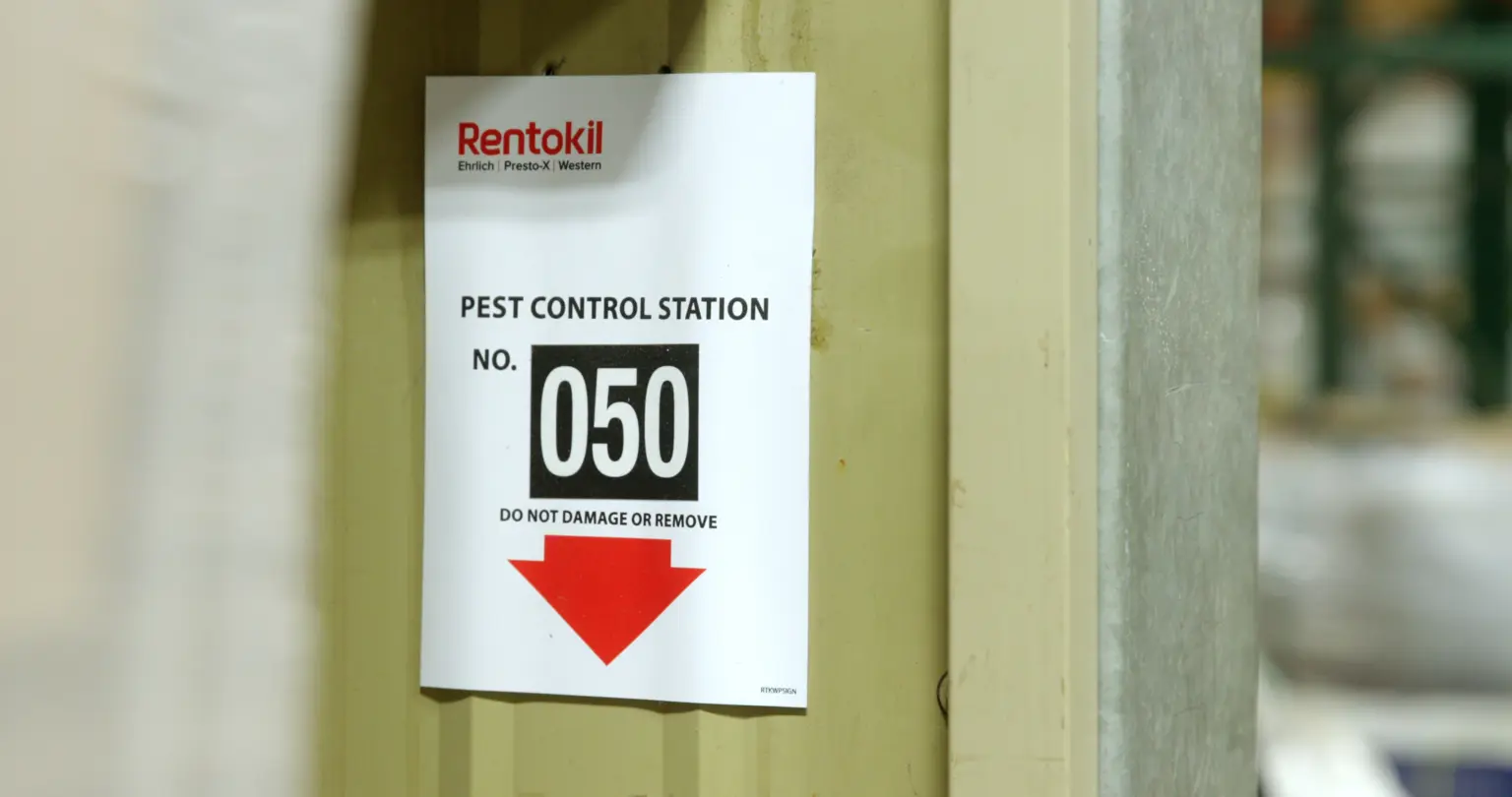
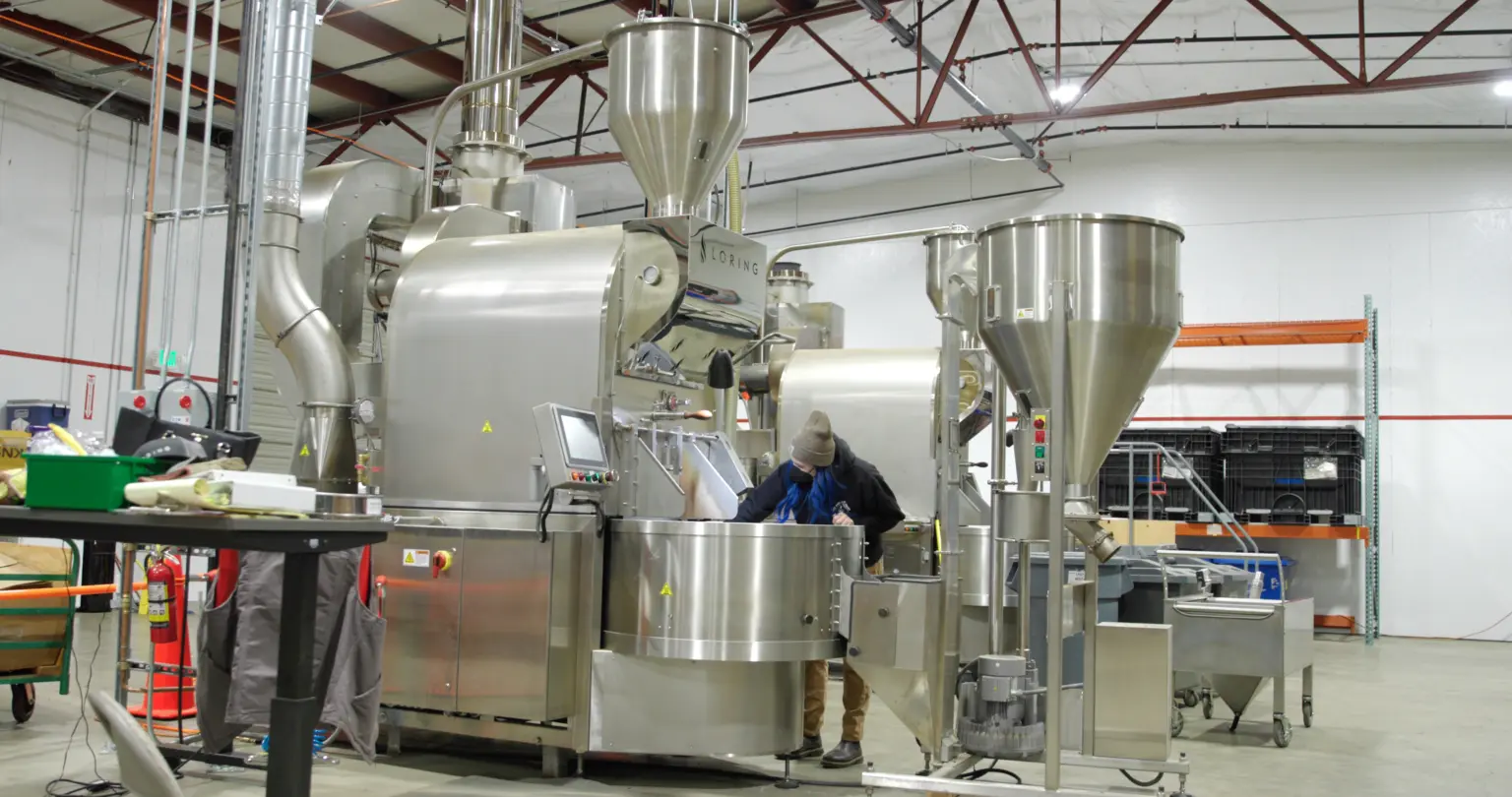
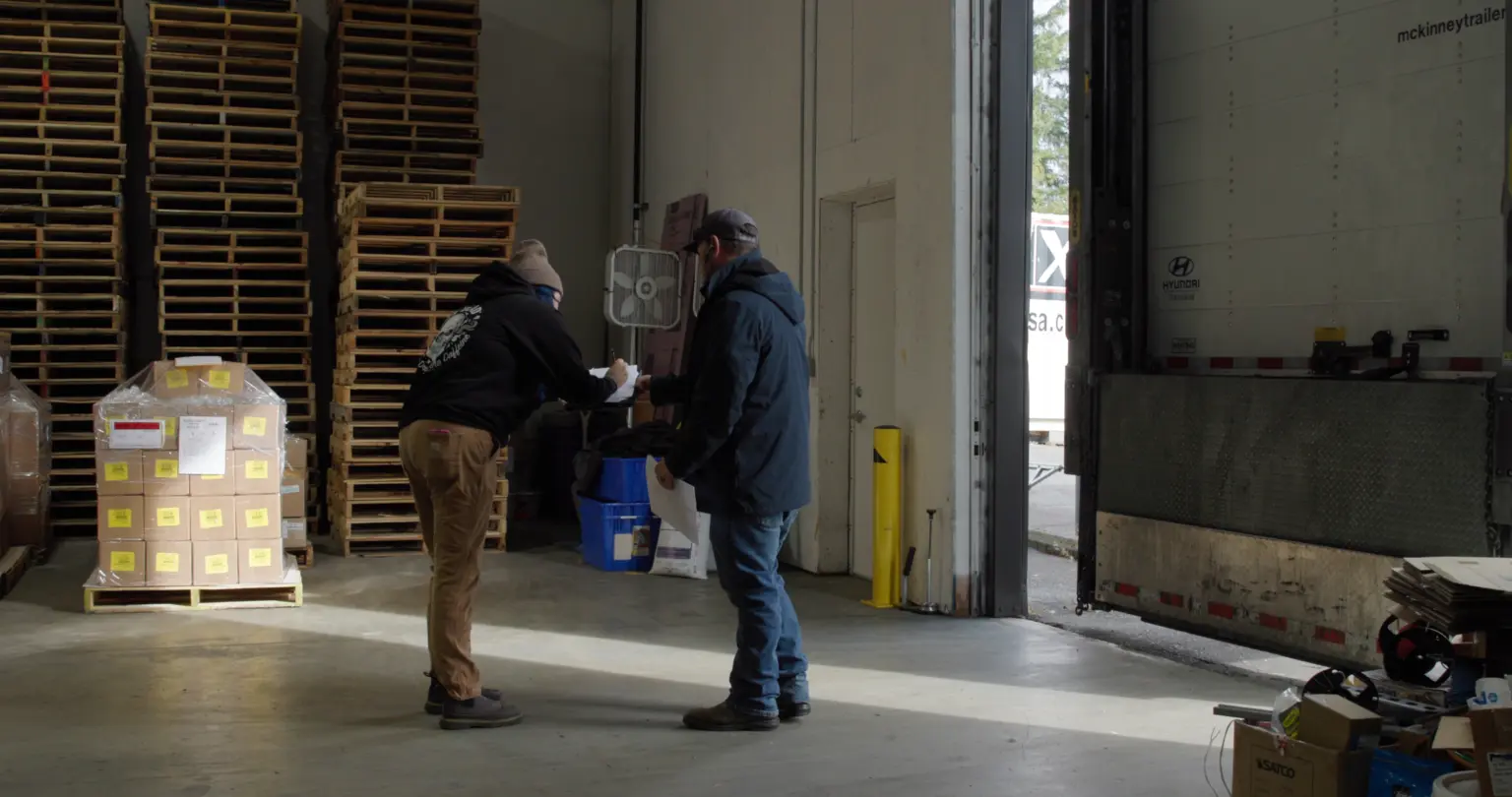
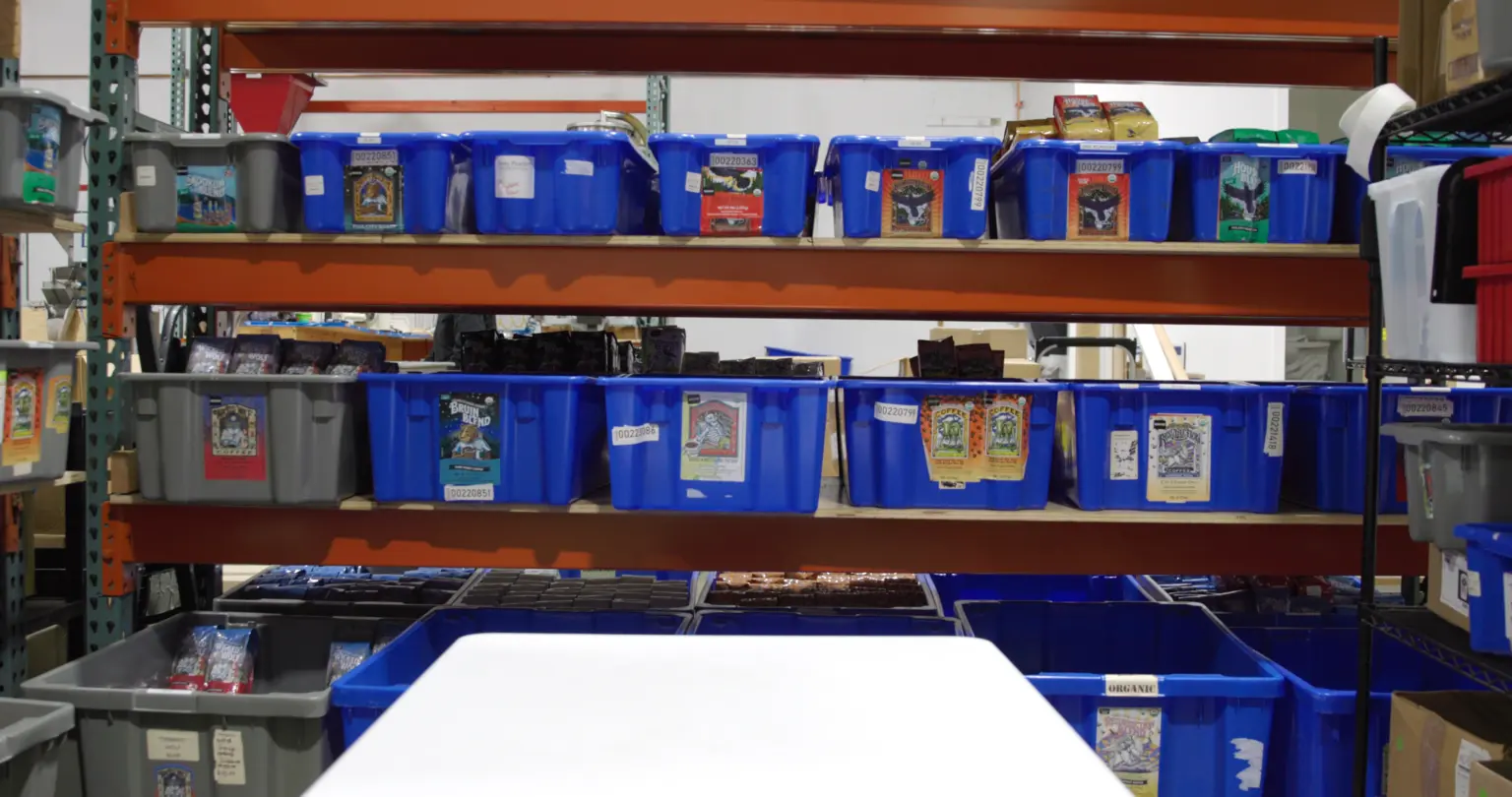
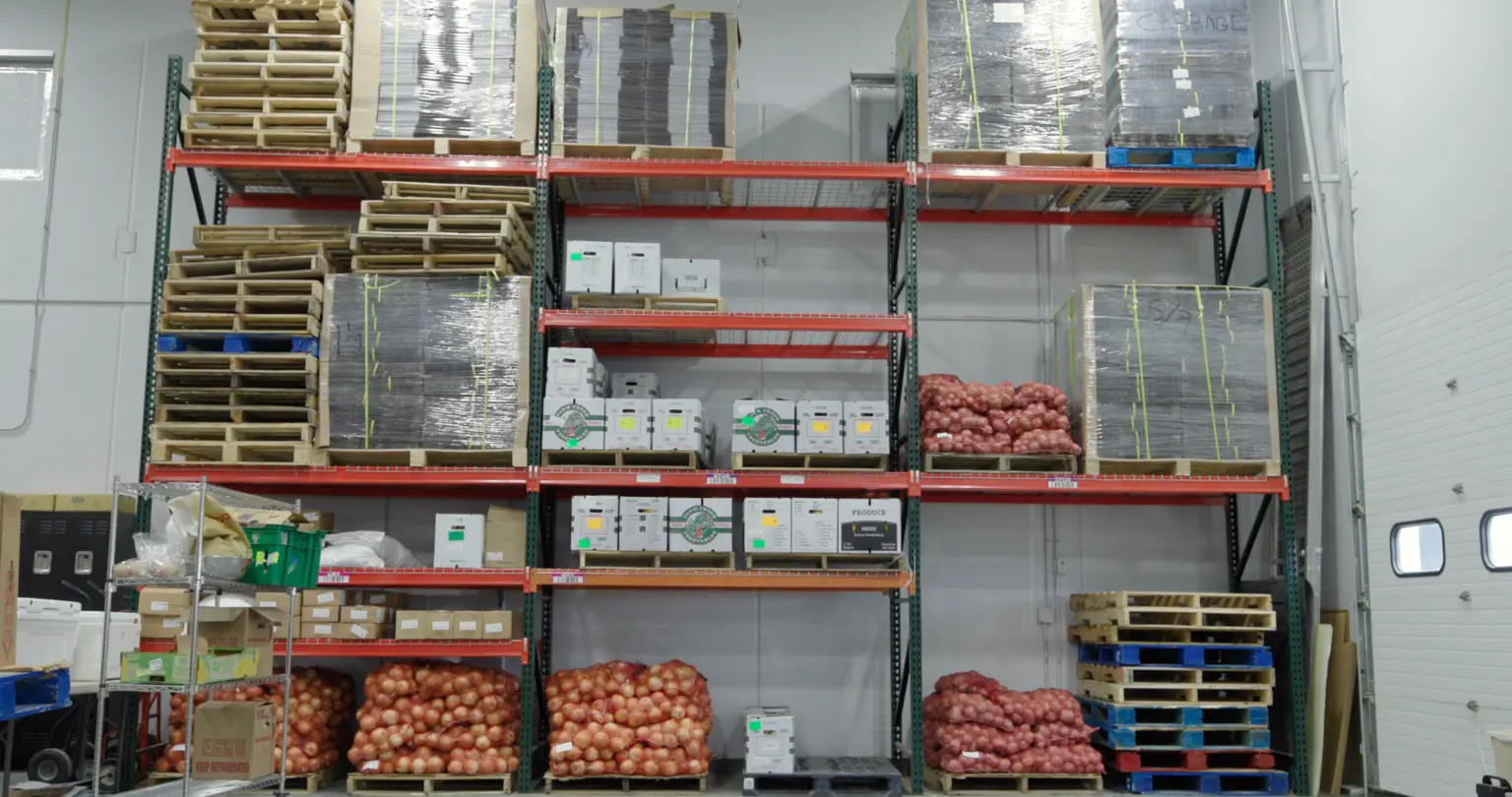
Try to always keep the big picture of your production processes in mind, because commingling and contamination risks are not limited to when you have physical possession of the organic products. Contamination can also occur while the product is under your operation’s responsibility, even when it is physically handled by a third party that may not be certified, such as a transport company or co-manufacturer. When evaluating your organic control points (OCPs), be sure to identify and address risks from your company and from contractors.
How Does Your OSP Relate to Organic Control Points and Organic Certification?
As an organic handler, you are required to write and maintain an Organic System Plan (OSP). Your OSP must provide a description of the practices you have in place to prevent the commingling of organic and nonorganic products, and the contamination of organic products by prohibited substances.3
In addition, your OSP must describe all practices and procedures, all substances to be used, monitoring activities including fraud prevention, your recordkeeping system, and any additional information deemed necessary by your certifier to evaluate compliance with the organic standards. Organic Control Points are all the places where something can go wrong, and your OSP is a comprehensive plan for preventing those mistakes from happening. Some handlers find it useful to have a separate OCP document for their business that informs their OSP, but having a separate document is not required.
Your certifier will review your Organic System Plan to see if it addresses all the OCPs for your business. Then at your inspection, the inspector will observe all aspects of your organic processing and review your records to verify that you are following your Organic System Plan. The inspector will be looking for any risks to organic integrity, from receiving all the way through the organic product leaving your facility. Recordkeeping is part of how you demonstrate that you have prevented contamination and commingling, and is required for every step in the process.
Facility and Process Design to Reduce Risk
As you design your facility layout and process flow, think about Organic Control Points, and identify opportunities for commingling or contamination. If possible, design your facility and workflow for clear separation of organic and nonorganic processing. By identifying possible contamination issues during facility and process design, you can avoid many risks to organic integrity. Below you’ll find common best practices that many handlers find helpful to reduce risk.
Separation by Time and Space
- Dedicated areas for organic: handlers often try to have separate areas for storage and processing of organic products. They will also sometimes segregate receiving and shipping areas for organic, especially if they handle unpackaged bulk goods.
- Buffer zones and barriers: consider how to create separation between processing areas. If you are processing organic and nonorganic in tight quarters, consider what barriers or buffers can you create between them.
- Time segregation: if it is challenging to segregate spatially, you may be able to create space with time. Examples include processing organic batches first thing in the morning or always processing organic on a certain day of the week.
Equipment Cleaning
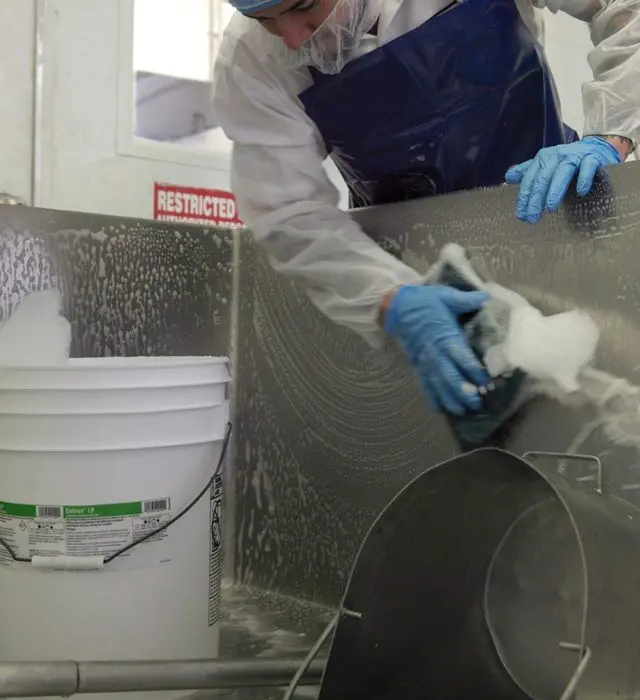
Food contact surfaces are a key point of risk for organic integrity, and the controls needed depend on how the equipment is used. For equipment dedicated to organic-only production, the main source of contamination to manage is the cleaners and sanitizers themselves, any cleaning or sanitizing agent used on food contact surfaces must be approved by your accredited certifying agent (ACA). For equipment shared between organic and nonorganic use, that same approval requirement applies, and you also need to clean the equipment and prepare surfaces before organic runs to prevent commingling with nonorganic products and ingredients. Equipment cleaning and surface preparation are a baseline control point in every handling and processing scenario, not just shared-use situations.
Facility Flow and Signage
As you design your space, consider the process flow, when and where organic ingredients, products, packaging materials, etc., may come into contact with nonorganic products or prohibited substances. You are likely already planning the process flow with efficiency in mind. But also look at it from the angle of Organic Control Points. Are there transfer points, storage places, or other areas or processes where organic integrity could be compromised? Develop visual ID systems for organic versus conventional, and make it simple and intuitive. Many handlers use color-coded labeling and signage that follows organic ingredients and products throughout processing.
Best Practices for Signage in Organic Facilities
Clearly mark all products, equipment, packaging, ingredients, areas, work-in-progress containers, etc., used for organic in your facility. If your staff needs to apply signage, make those signs easy to access where they are needed. Ensure signs are:4,5
- Visible: put them in a place where no one needs to search to find them.
- Easy to read: use large, clear text and minimal words. It should not require more than a moment to interpret the text.
- Simple: limit the number of colors and identifiers used so employees can recognize what each one means at a glance.
- Distinct and consistent: maximize utility by making the signs very easy and quick to interpret with consistent visual cues, like color, a symbol, or a word.
- Accessible: ensure staff with color blindness and low vision are able to identify signage. Avoid color combinations that are hard to distinguish, like red and green. In addition to color, include texture, a word or a symbol/graphic on signage.
- High-contrast: help signage pop by using high-contrast colors. For example, light gray against a white background is lower contrast than black against a white background. You can also use large, bold text to increase contrast.
Standard Operating Procedures (SOPs)
SOPs are a helpful tool that many handlers use to document processes and train staff, all to protect organic integrity. SOPs are written procedures that can be developed for all critical activities. They explain how something should be done, and are often submitted to certifiers as supplements to, or components within, the Organic System Plan (OSP).
When you have your process described and defined through SOPs, it is easier to train people on them, analyze them, change them, and prove to your certifier that you are in compliance through them. Analyzing your process and documenting it in SOPs supports risk assessment and helps identify critical organic control points for you and for your inspector or certifier. Your OSP and SOPs are both intended to be living documents that are reviewed and updated periodically, to make sure they are up to date and accurate. It is a good idea to develop a schedule for reviewing and updating SOPs. They should be readily available to staff as a reference, so they can confirm that the day-to-day work matches the SOPs.
Types of SOPs
You may have multiple SOPs for a single step in your process depending on the complexity of your operation. For example, cleaning and sanitation might include several procedures, and may warrant a separate SOP for specific pieces of equipment.
Steps that commonly have their own SOPs are:
- Ingredient receiving and verification
- Storage and segregation
- Cleaning and sanitation
- Pest control monitoring and approval of new inputs or practices
- Emergency response
- Contamination and commingling response and reporting
It is important for SOP documents to be clear, concise, and easy to reference quickly. They do not need to be complicated. In fact, the simpler they are, the better.
Monitoring and Verification
While your organic inspector comes at least once per year, you are the person on site every day responsible for organic integrity. You will benefit from an internal monitoring system. Consider performing internal audits of your records and SOPs on a regular basis, so that when the inspector comes it is not the first time you are pulling up records. Use the Organic Control Points (OCPs) identified in your OSP or OCP plan to guide your audit. Practice pulling up different records to demonstrate compliance.
Issue Response and Reporting
Contamination and commingling do happen in even the most effective operation. Your certifier understands that, and you just need to respond appropriately. Contaminated/commingled ingredients or products need to be isolated and removed from the process flow. They will then need to be discarded, or diverted into nonorganic production as appropriate. And of course, this process will need to be documented and reported to your certifier. You must immediately notify your certifier about the application of a prohibited substance to an organic product.6
A more serious situation occurs if a product leaves your facility for sale and you later find it is commingled or contaminated, meaning that it carries the organic seal but is in fact not organic. In this case, best practice is to immediately notify your certifier and the operation that took possession of the product. Your certifier will determine what the required next step is after that. The product may lose its organic status, and your certifier may issue a noncompliance or require further evaluation of risks.7 A swift and transparent response is your best defense against an escalation of consequences.
Investigation, Root Cause Analysis, and Corrective Actions
Your SOPs are a living set of documents. When something goes wrong, search for the root cause and update your procedures to prevent it from recurring.
In response to issues, ask your team:
- What can we do to address the issue?
- Have we identified any new or unknown risks?
- Are updates needed to the OSP or internal documents, like SOPs or the OCP plan?
- Are other corrective actions needed, such as developing new procedures, posting updated training materials, or training staff?
Listen to your team members who are working on the production line. They are an invaluable source of insight into what is working, and what may not be working, for implementing your SOPs.
Staff Training
Developing a plan to prevent contamination and commingling is the first step, but it takes your staff to implement it. Personnel training is key to maintaining organic integrity. Some operations are a one-person shop, others might have an intern or two during the summer, and still others have a large staff of shift workers. Regardless of your context, you must effectively communicate your procedures with every staff member who interacts with organic ingredients or products at every step: receiving, storing, processing, equipment cleaning, pest management, etc.
Training all new employees is very important. So what we do as part of the onboarding process is we make sure everybody gets time to sit down with our Quality Assurance team and really understands what organic means, what it is, and how we become compliant. We have continuous training available to everybody. About once a month, we do broader trainings that are available to the entire team in which we touch base on updated regulations, concerns, or anything that’s related to the organic market itself.
Your staff training program needs to ensure that your team is equipped to protect the integrity of your organic products. To do this, they must have an understanding of the organic requirements. While staff don’t need to know the organic regulations inside and out, they do need to understand some key points on risks and consequences of contamination and commingling.
These risks include:
- Organic ingredients and products cannot be mixed with nonorganic ingredients and products, and cannot come into contact with prohibited substances.
- The high-risk points in your process, where contamination and commingling are more likely (OCPs).
- Changes, such as new pest control or sanitation materials, ingredients, processing aids, formulations, label changes, or significant process changes, all need to be approved by your certifier prior to implementation.
- What to do if they believe commingling or contamination may have occurred.
Your team must also be well trained in your documentation and recordkeeping requirements. Staff should be clear on what needs documenting, when it occurs in the process, and how to document. This includes keeping records using labeling, identification, lot number tracking throughout the process for organic ingredients and products.
And finally, explain the why behind what you ask them to do. If staff are trained on procedures and also on why those procedures are important, such as how they support organic certification, how organic is crucial to your business and also good for people and the planet, they are more likely to buy into your procedures.
Conclusion
Preventing commingling and contamination is not a one-time project you complete and file away; it is a living practice that runs through every corner of your operation, from how your facility is laid out to how your newest employee understands their role. The good news is that every investment you make in this area compounds over time. Strong SOPs make training easier. Good signage reduces human error. A well-documented OCP plan makes your inspection feel less like a test and more like a confirmation of what you already know. A team that understands the why behind organic integrity becomes your best line of defense. Start where you are, identify your highest-risk control points, and build from there. Organic certification is a meaningful commitment to your customers, to the farmers in your supply chain, and to the integrity of the organic label itself. The work you do to uphold it matters.